
Symptoms
How to spot a plantar wart
Plantar warts often grow on the heel or the ball of the foot, where you put the most weight. Pressure can push them inward under a layer of hard skin. You may notice:
- A small, rough, grainy growth on the sole
- Tiny black dots, sometimes called seeds
- Thick, callus-like skin over one spot
- Pain when you stand, walk or squeeze it
Common causes
Why plantar warts start
Plantar warts come from human papillomavirus (HPV), a common virus that gets in through tiny cuts or cracks in the skin. Common reasons include:
Barefoot in shared spaces
Pool decks, locker rooms and gym showers are common places to pick up the virus.
Cuts or cracked skin
Small breaks in dry or cracked skin may let the virus in.
Picking or scratching
Picking or scratching a wart can spread it to other parts of your foot.
A weaker immune system
Children, teens and people with weakened immunity tend to get warts more often.
At home
What you can try now
Some warts fade on their own, though it can take a long time. These steps may help. If you have diabetes or numb feet, skip home treatments and call us.
- Cover it
- Keep the wart covered and don't pick at it, so it's less likely to spread.
- Flip-flops
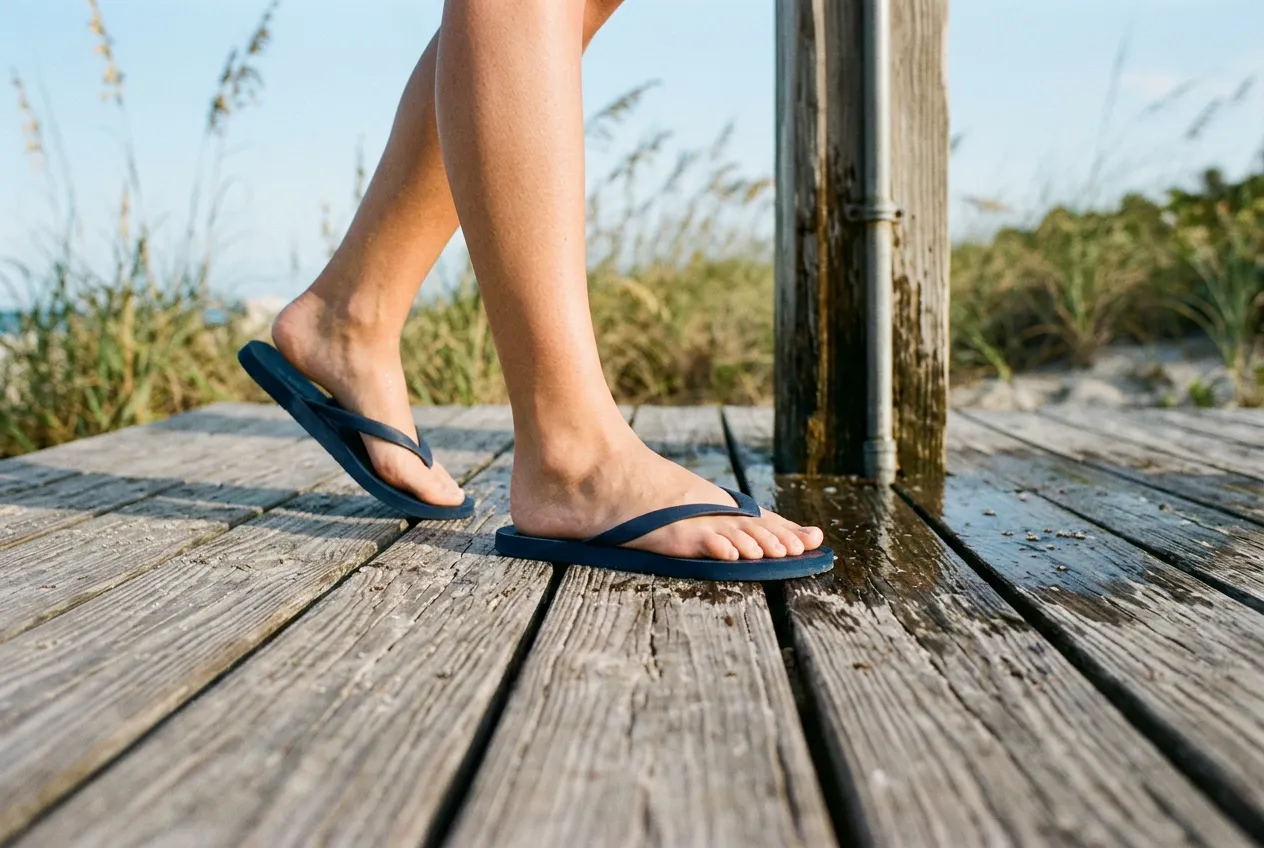
- Wear shower shoes on pool decks and in shared showers and locker rooms.
- Wart remover
- Over-the-counter salicylic acid, used as the label directs, helps some warts. Skip it if you have diabetes.
- Don't share
- Keep your own towels, socks and shoes, and use a separate file or pumice on the wart.
Treatment
How we treat it
Not every wart needs treatment, but painful or spreading warts often do. We start with the gentlest option and only move up if the wart doesn't clear.
Watch and protect
Small warts that don't hurt may be left alone and kept covered, since many fade on their own.
Medicine applied to the wart
Prescription-strength medicines applied to the wart may break it down a little at a time.
In-office treatments
Options a podiatrist may discuss include freezing, medicines applied in the office, or treatments that help your body fight the virus.
Removal for stubborn warts
If a wart keeps coming back, minor removal may be an option. Dr. Fernandez will explain the pros and cons first.
When to call
Don't wait it out if you notice:
- A wart that hurts when you walk
- A growth that bleeds or changes in color or shape
- Warts that spread or keep coming back
- You're not sure it's a wart
- Any growth on your foot if you have diabetes
If it's a medical emergency, call 911.
Questions
Plantar wart questions
Don't see yours? Call 954.355.9400.
Can a podiatrist remove a wart?
Often, yes. There are several options, and the right one depends on the wart's size, how long you've had it and your health. Dr. Fernandez will explain which fits you. Wart treatments are done in the office.
Are plantar warts contagious?
They can spread, usually through contact with the virus on damp floors or shared items. Covering the wart and wearing shower shoes in shared spaces may help.
Will my wart come back?
Sometimes. Warts can return even after treatment because the virus may stay in the skin. Ask Dr. Fernandez what to watch for after your visit.