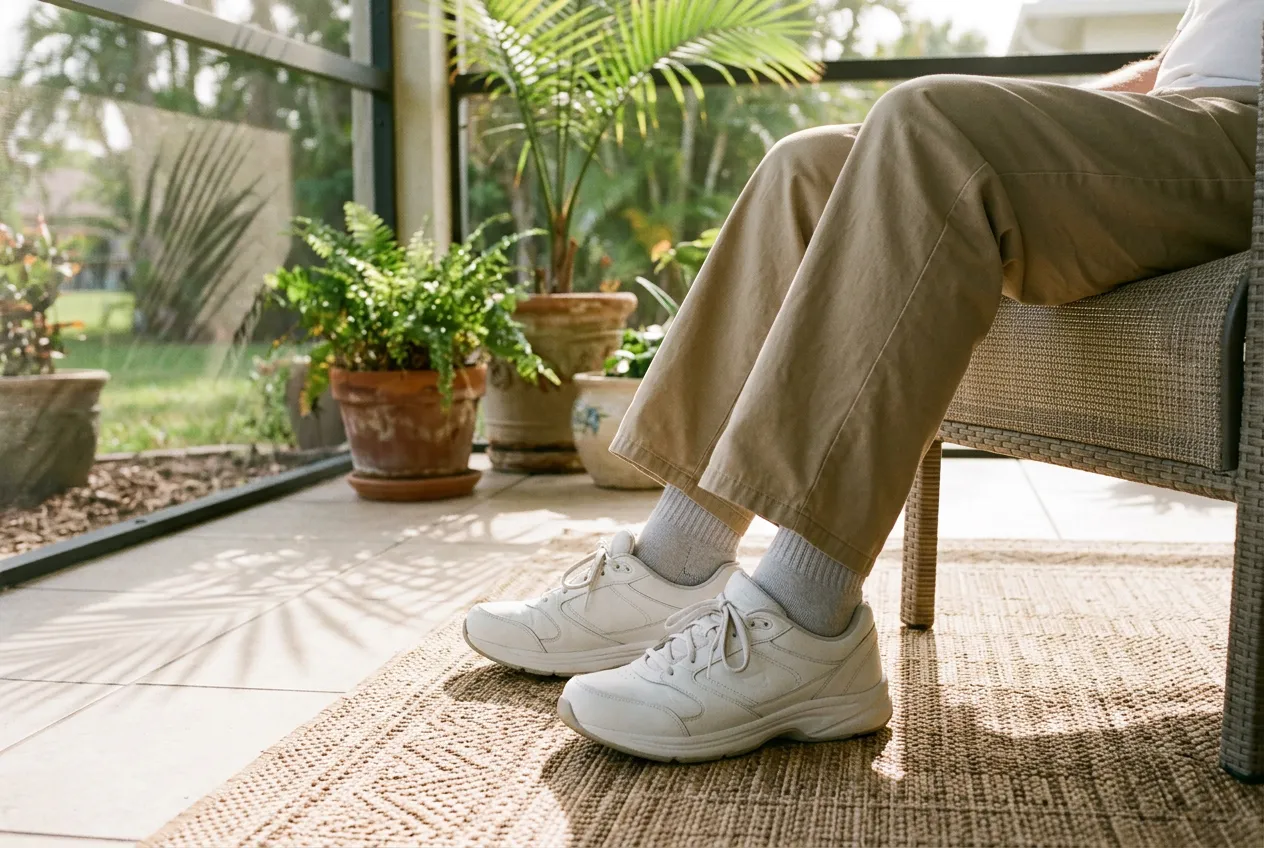

Diabetes can change the way your feet feel and heal. Nerve changes may dull your sense of pain, and reduced blood flow can slow healing. A blister, a small cut or a spot where a shoe rubs may go unnoticed, and a minor problem can grow.
A few minutes of care each day helps you catch problems while they're still small. This guide covers what to look for, habits that protect your skin and when to call.
It's general information. Ask your own care team what's right for you.
Why diabetes is hard on feet
Most people notice a stone in their shoe right away. With diabetes, nerve changes can make that harder. You might walk on a pebble, a rough seam or a rubbing shoe all day and never feel it, and the skin underneath can break down.
Diabetes can also slow blood flow to the feet. Less blood flow means a sore may heal slowly, and a sore that doesn't heal can become infected.
Dry, cracked skin, thick nails, corns and calluses are also more common, and each one needs gentle care.
Because you may not feel a problem, you have to look for it. That's why a daily check matters.
Learn more on our diabetic foot care page.
A two-minute daily foot check
Pick a regular time, such as after your shower or before bed, and sit somewhere with good light. Look at the tops, sides and soles of both feet, your heels and between your toes. Look for:
- Cuts, blisters, cracks or sores
- Redness, warmth or swelling
- A change in the color of your skin or toes
- New numbness, tingling or burning
- Thick, ingrown or discolored nails
- Dry, cracked heels, or a corn or callus that has changed
Can't see the bottoms of your feet? Set a hand mirror on the floor, or ask a family member to look. If something looks new, write it down or take a photo, so you can compare the next day and show your podiatrist.
“Because you may not feel a problem, you have to look for it.”
Every day
Habits that protect your feet
Wash and dry. Wash your feet daily in lukewarm water with mild soap, and dry them well, especially between the toes. Skip long soaks, which can dry out the skin.
Check the water. If your feeling is reduced, test the temperature with your elbow or a bath thermometer before stepping in. Avoid heating pads, hot water bottles and electric blankets on your feet.
Moisturize. Use lotion on dry skin, but not between the toes, where moisture can lead to skin breakdown and infection.
Choose socks and shoes with care. Wear clean, dry socks that aren't tight at the top. Shoes should fit well, with room for your toes. Shake out each shoe and feel inside for pebbles, rough seams or a torn lining before you put it on.
Don't go barefoot. Wear shoes at home, and on hot sand and pool decks, where a burn or a cut is easy to miss.
Leave these jobs to your podiatrist
Some foot care is safer in a professional's hands, especially if your feeling is reduced.
Nails. If you have diabetes, poor feeling in your feet or trouble reaching them, it may be safer to have your nails trimmed at your visit. A slip with the clippers can cause a cut you don't feel.
Corns and calluses. Don't cut, shave or file them, and skip medicated pads and liquid removers. The acid in them can harm healthy skin. Dr. Fernandez can care for them in the office.
Ingrown nails. Don't dig at the edge of a nail that's growing into the skin. Pain, redness or swelling there deserves an exam.
Read about corns and calluses and ingrown toenails.
When to call
Call the same day if you notice:
- A cut, blister or sore that isn't healing
- New redness, warmth or swelling
- Drainage or an odor from a sore
- A change in the color of your foot or toes
- New numbness, tingling or burning
- Fever with any foot problem
Don't wait for your next routine visit, and don't try to treat an open sore on your own. If it's a medical emergency, call 911.
Regular exams help too
Daily checks at home don't replace a professional exam. At a routine visit, Dr. Fernandez looks at your skin, nails, circulation and feeling, asks about any changes and gives you tips for home care.
How often you come in depends on your feet and your health. Many people with diabetes have a foot exam at least once a year, and more often if there are problems. Dr. Fernandez will suggest a schedule.
Your feet are one part of your overall diabetes care. Keep following your care team's plan for blood sugar, and ask for help if you smoke, since smoking also reduces blood flow.
Read about diabetic foot care and wound care.
Check your feet tonight
Take two minutes tonight to look at your feet. If you find something that worries you, or you haven't had a foot exam in a while, Dr. Fernandez can help.
Call 954.355.9400 or request an appointment. Hablamos español.
Diabetes and feet
Frequently asked questions
Don't see yours? Call 954.355.9400.
How often should I check my feet?
Every day, at about the same time. Many people find it easiest after a shower or before bed. If you can't see the bottoms of your feet, use a mirror or ask a family member to help.
Can I use a heating pad or hot water bottle on my feet?
If you have diabetes, it's best to avoid them. When feeling is reduced, you may not notice heat that is burning your skin. Warm socks are a safer choice.
Do I need a foot exam if my feet feel fine?
Often, yes. Reduced feeling can hide problems, so feeling fine doesn't always mean everything is fine. A routine exam can spot changes early. Dr. Fernandez will suggest how often to come in.